

So the update to version 2 for the Boss GT-100 has been released. It is a relatively straight forward procedure to update the unit, and I take my hat off to Roland for continuing to support the GT-100 and not write it off for the sake of producing a new 'flagship' unit, here is a little review of my first thoughts since the update. There is also tough competition from Line 6 (now acquired by Yamaha, which should be interesting), Digitech and of course the high end and very expensive Fractal AXE-FX and Kempler Profiler, so this might explain why Roland are keen to develop the unit given the R & D time taken to get another product to market. Whilst the GT-100 doesn't compete with the AXE or Kempler, it is great to see some very careful and well thought out additions to the Roland. For my full review of GT-100 version one, please click here.The headline features of the GT-100 Version 2.0 update, include the addition on Boss' new Multidimensional Processing MDP effects, such as the Tera Echo and Multi Overtone. I am particular looking forward to using this as part of my duo (North & South), as it adds fills out the sound. There is also an acoustic guitar simulator, I have only played with this for a short time and it seems to work, trying it live will be the test of this. There is also an improved rotary effect, which again is useful for creating organ sounds when live looping.I am particularly interested in the guitar to midi function, this is very useful for me. Whilst I have the Roland GR-55, having the GK-2 is a pain (okay it's not really a pain it is a fantastic piece of technology, but the caution me never really trusts it for a live gigging situation). The guitar to midi is only monophonic, but it is great for getting lines down into a computer, and also for transcribing songs. Again, I haven't really tested this, but I will follow up when I do.There are a couple of new amp models, but I tend to use the Natural Clean now for most of my recording because it sounds really good, this plus a different stomp box in front gets the the tones I like. There is no information on line, but one of my criticisms of the GT-100 was the speaker simulation, and I can't really tell if this has been updated, it doesn't sound like it to be honest.Finally, Roland have produced a Mac editor that actually seems to work and looks like it has come from this century! The Boss Tone Studio is a graphical interface for PC and MAC and it works so much better than the other attempts out there.To sum up, well done Roland, fix the speaker sims, power supply and XLR output and this will be one hell of an awesome toolEnjoyPeaceNeil
Review : Boss GT-100 Live : Initial thoughts!
Recently I have been gigging using the Boss GT-100 direct into a PA, due to playing in a few quite small rooms and I wondered how it would perform in these situations (and if I could actually get used to it!) First off, I should say that I am very happy with the unit for recording, and will be putting up a full review at some point, and on the whole it is a very versatile unit and there are a couple of features which I totally love!! Here is a little sound clip of the GT-100 recording of a improvised solo over Steve Vai's Tender SurrenderI was quite happy with that, especially when mixed in the rest of the track.What I will be discussing here is how it performs direct into the desk and not how it performs as a pedal board into an amp (I am yet to try this live, but I will!). On the whole, I am quite impressed with the unit, it performed really well. The set up was as follows, guitar into the GT-100, this fed directly into the PA and I then got a feed directly into my monitor. It was a strange at first to have no amp sound, but with the GT-100 set to Line/Pa output, it actually sounded very full and as expected from setting up patches at home, there was a lot of bass which I had to dial out. Dialling this out was quite easy thank to the controller knobs on the front panel which are linked to main parameters of the amp. I thought that this was really useful addition and made it feel like using an amp (even if I did have to bend down a lot further!). Having said that, I did find the controller knobs problematic in another regard as they turn very, very easily and there were a number of times during the gig when either my massive foot or my lead got caught on one and managed to turn it. This ended up with my pedal assigns changing a couple of times and that was pretty annoying. I guess I could technically tape them down to prevent this. (*) Using the GT-100 means that setting up (and loading in) is SIMPLE!! One little flight case and guitars, and the one cable and plug the guitar in.SoundsThis is the most important thing and I found on the whole it sounded pretty good and very consistent. It wasn't a valve amp, it doesn't respond like a valve amp, but does anyone in the audience really notice? Probably not, so in that regard it is only me whom is really bothered. Sound plays a crucial role in one's performance and if the player isn't happy it can impact on their performance, and I am actually quite affected by this, but having said that, I found that on the whole the GT-100 performed very very well, and that some of the issues I had will be fixed with time and tweaking (and reading the manual perhaps!)Firstly, I should describe how I approached using the unit, which might have some impact in my experience and might be different from someone else's. I am not someone who tries to replicate in great detail the exact sounds found on recordings, I like to get a ball park sound, and try and get the effects reasonably right. As such, I tend to have a kind of simple is set up. I mirrored my previous set up running pedals directly into a clean amp in the modeller and this worked well, although I got the benefit of a second amp should I want to use it (and I did). Basically, I choose a clean amp model (the Advanced COSM Natural Clean model), which I think sounds fantastic as my base amp, and the Stack Crunch as my 'slightly' dirty channel. I think that modellers do clean very well, and this model is quite responsive too, and if you add a boost you can actually get some nice crunchy, full tones, but they aren't too responsive to volume control interaction, but I still think they pretty fantastic.So I had my set up running some pedals into the amps models, and then a couple of time based effects after the amp (something I can't achieve with my Blues Junior but can with my Egnater due to the effect loop). Before the amp I had the (Wah on the expression pedal), Compressor, OD (set to Mid Boost), FX 1 (Phaser), FX 2 (T-Wah) and then I had Channel 1 (Natural Clean) and Channel 2 (Stack Crunch), after the amps I had the Chorus (I don't use it and wish you could assign it to something else), delay and finally reverb. I set up one patch for the whole gig and set the unit to patch mode (a great feature, just like the Nova System)In preparation I did tweak the amps more detailed settings such as speaker cab and mic positioning. On the whole the speaker modelling was shockingly bad in my opinion, the only thing that seem to work was the 'original setting'. I know I have been spoilt by having some fantastic speaker modelling software (Live G in Digital Performer) but this was pretty ropey in my experience. Having said that I was reasonably happy with the 'Original' setting and with a bit of movement of the microphone and microphone choice, I was happy enough!I was also particularly impressed with the Stack Crunch model, and it does sound very powerful and throaty through the monitoring system I used, paired with a OD drive pedal (I am using the mid boost model at the moment in this set up, but did try the OD-1 model previously), I found I had a great rhythm tone and and a great saturated lead tone! It is still early days, but I think this really has potential for exploration, and on top of that I even got a compliment of my distorted tone. Another factor which is important for live use and something I found particularly heartening with the GT-100 was how it seems to sit well in the mix. This is probably because I wasn't drowning the stage with amp noise, but also how the actually amp sounds. With the GT-100 you also have the added bonus of being able to turn everything down using the expression pedal (depending on where you place it in the chain) without loosing the tone of the patch (if you put it last), this is very useful as you can just adjust the overall volume slightly if it is over powering in some songs. I did have a slight issue with the volume pedal being too sensitive to my big feet, but I have just looked in the manual (first time) and found that you can adjust this. So using the Accel/CTL pedal I was easily able to switch between a lovely clean sound and a nice crunchy rhythm sound. Kicking in the OD (mid boost) pedal, gave a nice blues tone with the clean amp and a nice saturated lead tone with the stack amp, this worked perfectly for me. I would like the option to add in another distortion pedal, but I can just use another mirrored patch for this (which I will). I did have a few problems with inconsistent levels but this is just a matter of tweaking and getting things right, but there was a bit of a jump between the two channels.Using the GT-100 in pedal mode, basically I have one pedal board to work with (until I switch patches), to engage pedal mode was very simple and just needs you to press the two Bank Up/Down buttons together. I didn't have a problem with this, but I did have a problem with the controller knobs mounted on the front panel. When pressing FX2 (or Bank Down) switch I kept catching the small controller knob with my foot, it is very sensitive and in pedal mode if you change the value with these switches it actually changes your pedal assigns. So you go to press what you think if assigned to FX1 and you discover that it has completely changed it's assignment. One thing I really, really, really (Really!) love about the GT-100 is the multi-assignment of parameters to one of the controller pedals, this is fantastic because you can set up the pedal to change multiple parameters with one pedal click. For example, you can increase the level and gain of an overdrive and also increase the delay time and level for a solo, all with one pedal press!! Now that is so cool, and the potential is quite limitless. I am looking forward to exploring this more, especially for setting up certain triggers within songs.One this I will say though the Touch-wah sounded great at home but like a demented duck live, it sounded horrible, will have to tweak. I should add I have tried a number of envelope filters and I think I am very partial to my EHX Q-Tron, so I am probably bias! Also, I switched off the Loop pedal and used this as another assign (more useful perhaps!). Oh and yes I hate the power supply, ROLAND why can't you make it an IEC connection? Would it really take up that much space? I hate these flimsy laptop PSUs!!!!! I hate them, and I have ZERO confidence in them live, they trail all over the place, and are very very flimsy and won't take being accidentally stomped, pulled out or worse if they break, you can't just swap them out for another cable! This plus the fact there is no balanced XLR output, means this unit isn't a professional as I think it actually is. This is very disappointing.I thought it would be easier to sum up some of the key points in a bullet list.Pros
- Consistency in sound reproduction. i.e. sounds sound the same from gig to gig!
- Multi-assignment of parameters (this is awesome!)
- Switching between Patch and Pedal mode, a little bit easier than my beloved Nova System (only a little bit though!)
- Connivence! Oh yes this is so convenient, light and takes seconds to set up!
- I really love the Wah pedal, easier to engage than the cry baby's I have and no 'clunk' on switching.
- The clean sounds sound fantastic and work well in a live setting, they also work well when driven with FX pedals.
- Some much room for exploration.
- You can jump right in without reading the manual (but it helps!)
Cons
- Controller knobs turning by accident! (*)
- Getting the balance between levels (okay probably my fault this one!)
- NO balance XLR OUT WTF to that!!! I am pretty shocked at that omission, which meet you need to use a DI box or an XLR to Jack lead (not ideal!)
- Power supply is pathetic and why can't it be an IEC connection? cost??
- Okay, yes, it just doesn't feel quite right, especially when adjusting volume on the guitar in the crunch range
- I had issues adjusting the volume pedal, I think there must be a volume curve somewhere to set this to my big feet, but I found that the volume jump at the end of the range a bit too much.
- Wish I could assign the Chorus effect to something else (I hate chorus!)
- Oh the speaker modelling is SHOCKING, sorry but it is pretty hideous, it seems the best result you get is by just leaving it on original! (then again maybe I have been spoilt!)
I would say that some of the things I have put down as cons are about 50/50 my fault and the unit! Also, it goes to show how easy the unit is, as I have done all of this without once using the Manual, and of course I will put my hands up and say that some of the issues are down to me!I am very very very very excited that Roland have continued the development of this unit and are about to release a Version 2.0 free software upgrade for the unit, particularly for me that this includes audio to midi implementation, this is pretty phenomenal! Well done Roland!!Things that I am looking forward to trying
- Using the GT-100 directly into my actual amps (I hope that I can switch channels on my Egnater with it too!)
- Trying two of the same amp models but with different settings (I.e. The Natural Clean model with the gain cracked in channel two)
- How much fun and ease in performance the multi-assign makes this, I have a lot of things I want to try!
- The acoustic simulator!
SummarySo in a nutshell, for me it perfectly possible to gig with just the GT-100, I do miss the 'moving' air, control of dynamics and tone of my other amps. But being brutally honest, this produces a close approximation and is a lot less hassle when it comes to loading out. I mean my existing set up is already pretty minimal, but this is even more minimal, and if they had included an XLR input it would have been even quicker!! The other thing that I am being brutally honest is that apart from the people reading this, 98.7% (I made that up, it is probably more like 99%) of people at a gig won't notice or even care what the guitar sounds like or what is generating it, as long as it works with the band and as a player you can deal with it. I have to say the GT-100 ticks those boxes. Does it sound exactly like I would like, well no but then again I am fussy, and again having said that, once the band fires up and temporary threshold shift kicks in, even as a player you start to loose definition in your hearing. I wear earplugs and so I am always getting a reduced (in the mid-frequency range at least) sensation of what the amp is actually doing. So, the GT-100 is a good solution. It is an extremely versatile unit and the ability to multi-assign parameters to a footswitch is fantastic, on the whole the effects are very good (sorry but I do prefer TC Electronic Effects and my Nova System, but until they make the changes I would like to the Nova System then this is the one) and the amp modelling in the advanced selection is pretty fantastic too. I think it is a good solution and it helps keep stage levels down too (always something to please the sound engineer!). I will certainly be using this a lot more in future!!EnjoyPeaceNeil (*) I just randomly opened the manual and found that you can actually lock the knobs! Job done!! I am more impressed now.
NAMM 2014 New Boss ME-80 Guitar Multiple Effects review

A new announcement from Boss for NAMM 2014, here are a few quick review thoughts! This really does look fantastic, I had an ME-70 for a while, but quickly realised it's limitations and I wasn't particularly enamoured with the sound palette. It seems like Boss have been beavering away to come up with something new, and this is it. I really like the fact it has eight effects with eight switches. I think that is pretty massive and is extremely practical, with nothing else on the market offering that level of flexibility at that price point. Every unit so far has been a compromise on which effects you can switch on and off and which presets you are switching between. (obvious exception being the Line 6 M9, but that doesn't have amp modelling). Like other units such as the Nova System (again no modelling), I think it might be nice to have a dedicated switch for patch to manual mode switching, that doesn't involve holding combinations of switches down. Even the GT100 has this, although you can assign an external switch to switch modes, which is useful. It is also obvious to see some of the missing features which enable it to be placed at a lower price point and not interfere with sales of something like the GT100, such as 4CM functionality.All in all, from the brief reports, it looks like a really simple and flexible unit to run directly into an amp if you just want effects, and something you could use with some of the amp models, should you need to. I think it is a great forward progression for the ME series!From the Boss Press ReleaseMobile, battery powered, and filled with a diverse selection of flagship-quality BOSS amps and effects, the ME-80 is the ideal compact tone processor for performing guitarists. A friendly knob-based interface makes it simple to dial in great sounds in seconds, while easily selectable operation modes offer the flexibility of individual stompbox-style on/off or instant recall of complex multi-effects setups. Unique new footswitches deliver twice the control of previous designs for efficient and intuitive effects switching, patch selection, and real-time sound shaping while playing on stage. The free BOSS TONE STUDIO software unlocks even more tonal possibilities, providing a cool graphical interface for tweaking and organizing sounds on your computer, plus a web connection to BOSS TONE CENTRAL for direct access to free gig-ready patches created by top pro guitarists and much more.
- Compact and powerful floor multi-effects with a simple knob-based interface
- Eight simultaneous effects categories, each with multiple effects types
- Dial up tones with the ease of using your favorite stompboxes
- Includes a massive selection of top-quality effects, from classic BOSS stomps to the latest MDP effects
- Updated flagship-level COSM® amps derived from the GT-100
- Eight multifunction footswitches and expression pedal
- Manual mode for stompbox-style on/off; Memory mode for switching complete patch setups
- Delay section includes Phrase Loop function with 38 seconds of recording
- Runs on six AA batteries or optional PSA-series AC adapter
- USB audio/MIDI interface built in
- Free BOSS TONE STUDIO software allows you to edit and organize tones on your computer, and also preview and download free patches directly from the BOSS TONE CENTRAL website
Peace Neil
TC Ditto x2 Looper announced - review

Wow a great announcement from TC Electronic, they have just announced the new Ditto x 2 Looper, so here is a quick first thoughts review. The original Ditto was a fantastic looper with it's simplicity and size. The Ditto X2 looks to add in just enough functionality to make it truly fantastic, but still maintaining ease of use. I personally think the link to Jamtracks is really fantastic addition, and will have a great impact on learning (and playing along live if you want too).Obviously it isn't as fully spec'd as some of the other offerings from Boss, Digitech etc, but I think the strong point is the simplicity of operation and for many guitarists (who aren't full on loopers), it has just the right feature set. I am kind of glad that it doesn't have the awful drum tracks that most of the other offer (maybe a simple click would have been good?). I am sure that will complain about the 5 minutes looping time, but really? I think that is pretty impressive and a good amount of time (remember the early loopers only have seconds! It is the immediacy of looping that TC have targeted here, particularly targeted at the guitarist (well only the guitarist!).All we need now is a new Nova System II, with amp modelling to be the perfect accompaniment...come on TC make my year! PeaceNeil
Mooer Funky Monkey Autowah MAW1 Video Review

Here is the video to accompany my recent review of the Mooer Funky Monkey Autowah MAW1EnjoyPeaceNeil
Roland GR-55 Guitar Synth Review
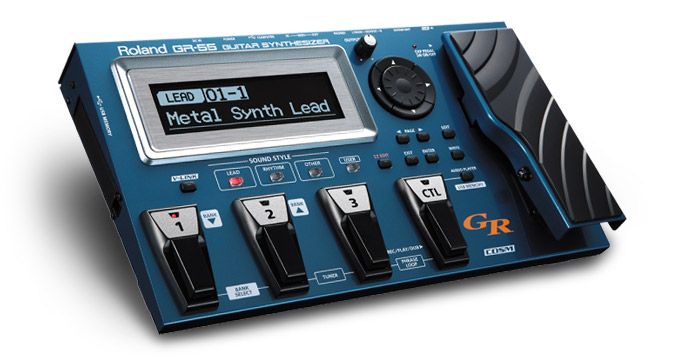
I will start off by saying that this is NOT a total in-depth review of all the features of the GR-55, as it is an IMMENSE product! There are just too many options and possibilities that you can set-up with this unit, I think it would be impossible to fully detail all of them. I am taken a-back by how powerful the GR-55 is, and with all gear with this level of depth, it can take a long time to fully discover everything about the unit (if you ever do). Needless to say the more you put in, the more you get out with something like this, but it is VERY easy to get started and to me that is one of the selling points of the unit. You can go as deep into the unit or as shallow as you like and still be impressed with everything on offer.So this review is more of a review of my experience of the unit and what I have come to like (and dislike about using it), I will not be able to cover everything that the unit does (I am still discovering myself even after owning it for ages!). So what you will get here is my experience of using it and I hope that they are of use to you. There is also the possibility that some of the things I point out as maybe negative, might actually have a better solution, I just haven't found it yet and would love to hear your thoughts.First things first, to get the unit up and running you need to install the GK-3 HEX pickup on the guitar which makes all the magic work. This pickup works using a similar principle to traditional guitar pickups, except it converts the voltage output into digital MIDI data (consisting of pitch, velocity, note on, note off data etc). The special cable not only allows for the transmission of MIDI data, but also the signal from your guitar too, which can be processed using the in-built modelling too (amps and FX's). This combination can lead to some very interesting and innovative sounds. One of the biggest problem with MIDI guitar systems, apart from tracking (tracking refers to the time delay and accuracy of note output from the unit), is spurious triggered notes and pitch issues. A lot of these problems can be overcome by the correct installation of the pickup.Installation of the GK-3 pickup. This wasn't too bad, a little bit fiddly but if I can do it....anyone can! My advice here is find a good space to work in, and separate all the parts before you begin. If you follow the instruction manual to the letter, you should have no problem. I should add that I only mounted mine using the sticky pads and it isn't drilled directly into the body. Firstly, I couldn't bring myself to drill into my guitar and secondly I wanted to be able to sell it, should I not be happy with it. I recommend that if you are going to drill it, check out the internet for videos and the like of the best way of doing it.....good luck! The next job is to ensure the high of the pickup is consistent (depending on the profile of your guitar and bridge) and this is achieved by turning a small screw on the pickup itself. With the pickup installed and the unit mounted on the guitar (you only have to remove the strap button and it fits straight on there) you can set up the string sensitivity and other attributes relating to how the pickup responds to the the string movement. These are all faily straight forward and with a bit of a tweaking it all seems to work perfectly. I have noticed that on the guitar I have sacrificed for the pickup, I initially had 9's on it and these are a little light and did result in some ghost notes and false triggers. Moving up to 10's and most of these problems disappeared.I will state one very important thing to bare in mind, as a player this device requires you probably to play 'cleaner' and more precise. I think this is a good thing, you might notice at first that you are triggering random notes or noises, when you investigate you might discover this is down to your picking hand hitting random strings (when muting perhaps) or imprecise bends causing random sounding notes. This is a great exercise in making one slow down and concentrate a little bit on technique. Of course, if you are just using the amp modelling, COSM guitar modelling, your playing will be whatever your playing is!In UseI found the user interface of the GR-55 to be extremely easy to get my head around, the manual (in true Roland fashion) is a little bit of a harder read, but they Roland are getting much better in that respect!! Of course, you will need to spend a lot of time pressing buttons to move between pages and parameters, but with the big scroll wheel and lovely screen it isn't too much of a problem. Of course if you can, download the Editor software and you can then do everything on your computer. I would also recommend downloading the librarian software as this makes patch management and installing some fantastic patches from the Roland website (and others) a breeze.I found that using the unit as a traditional guitar processor generally fine, although I would have like to be able to perhaps switch more than one pedal on and off (via the CTL) mod switch, maybe to control an overdrive pedal and mod pedal, but hey I you can do this with two patches, it isn't the biggest deal in the world. I should mention that the MOD pedal can be assigned to different functions for each patch. This is really cool as you can control parameters such as volume, wah, modulation effects and delay and blend between layers.With editing you can go very, very deep and create amazing instruments, combining the guitar's pickup, a modelled guitar and two PCM tones, which can then be blended in. Imagine something like your normal guitar running through a Marshall Amp, with a Banjo, a Koto and massive saw synth, or your guitar running through a Fender Tweed, a Telecaster with a DADGAD tuning, a string section and a ballad piano! You are pretty much only limited by your imagination, and whilst the synth engine on the GR-55 doesn't allow the depth of synthesis as you might get on an actual synth, it is not to shabby either! Adding the MIDI out into the equation, you can then have access to an external sampler, synth or virtual instrument, that is simply mind blowing!! I have lost hours playing around with all the possibilities, for me as well, it is a sound design dream because playing on the guitar gives you a different style of trigger input into the system (i.e different from the way you might play on a keyboard). But if you aren't into doing loads of editing or want to get started straight away, there are some great patches (and some dubious ones!!) and there is an easy edit option called EZ Edit (similar to that on other Roland/Boss gear like the GT-10 and ME-70 for example). This allows you to control the amount of effect or dial in a brighter or warmer sound, very...erm...well easily!Playing the guitar and changing patches is very easy via the footswitches, and the small buttons on the GK-3 enable easy switching between banks. Watching many of the demos online, to get a flawless performance, it requires the user to put their patches in a logical order, and this is easily done via the GR librarian. I have seen some frustration from users (not just with this unit but other gear like the GT-10 or ME-70 or HD500) that when they watch a performance demo online that the perform seems to switch seamlessly between patches in the song. This does require preparation, and as with all things in life, a little bit of preparation goes along way, and the same can be said with this unit. Of course, you could use an external MIDI controller to switch between your patches (something like the Roland FC-300, Behringer FCB-1010 or Tech 21 Midi Moose) or even better than that if you are a solo performer working with backing tracks, you could get your patch changes triggered via MIDI from a DAW along with your backing track playback. That is pretty cool!SoundsWith the GR-55 not only do you get a selection of synth sounds, from pianos, brass, strings and other typical synth stuff you get access to COSM modelling of guitars too. These range from types of guitar (Strat, Tele, Banjo, Acoustic, Nylon) to tunings (awesome!! The tuning options are great Drop D just like that...that is pretty fantastic!) to pickup positions and types! It is actually pretty mind blowing what you can potential do. I think the COSM guitars sound amazing, I really really love the acoustic guitar, it is perfect for me. Blend this with some strings and I could be playing for hours and hours (and to me that is the mark of a good piece of gear, something that makes you loose time!) I am will hold my hands up and say that I really struggle with amp modelling (I have pretty much tried them all over the years, with the exception of the AXE-FX and I always give up on them). I have to say that some of the COSM amps do sound good, but I feel that I really needed to spend sometime getting them to work (for me). But they aren't bad, neither are some of the modelled FX's, but a GT-10 or Line 6 HD-500 this isn't. But hey what other box (of this size too!) give you the option to go from playing a Les Paul in drop D into a full size Marshall stack to playing a Banjo into a Fender Twin in one click, that is awesome!With regards to the synth sounds, as someone who spent a lot of time selling and demoing (and owning) the Roland JV 1080, 1010 and 2080 synths, the sounds on the GR-55 are very familiar. I do really like the strings, pianos and some of the wind instruments. To be honest they do sound a little dated now, of course you have the flexibility to add and merge different sounds, as well as run them through COSM amps and FXs to great your own unique sounds, but as base sounds they are a little...old. Having said that, connecting this up to your DAW or computer via the MIDI out and you have access to a million other sounds. I have been using it with Spectrasonics Omnisphere and Native Instruments Absynth for example, and you are unlimited in your palette of sounds.As mentioned previously, the ability to combine four distinct sound sources (guitar, modelled guitar and two PCM sound sources) with amp models, FX's and various levels of blend does open up an insane sonic palette to the user, add into this the MIDI out and the sky is the limit, especially if you aren't a great keyboard player, your can now bring your guitar chops to a plethora of different instruments and develop truly unique sounds. I would add that to get the most authentic sounds from the synth instrument, you do need to consider how the actual instrument is played, i.e. trying to shred on a saxophone doesn't sound right...but then again it might be the sound you are looking for, that is a great thing about this unit, you can make it your own!Other featuresThe unit has a built in Looper, whilst this isn't up there with the stand along Boss RC series of units, it is functional and you can use it to build up layers and layers, which is really cool. If you also want to use the GR-55 live there is the ability to plug-in a USB memory stick, with backing tracks for example and then these will be played back via the unit, in essence making you a one man band . The unit features a 'guitar out' which enables you to take the sound from your guitars pick up and and amp/FX modelling and send it to your existing amp set up for example, to give you access to even more sounds. Wow!ThoughtsIn summary, here are a few of my thoughts....
- THIS IS AN AWESOME UNIT! The possibilities for sound design, composing and guitar playing really are incredible.
- I have only used it live once, and to be honest it was a little bit of a nervous situation, as if I was doing it regularly I would need to install another GK-3 on a back-up guitar. If the unit went down I guess you would be screwed, but then again this could be said for an unit.
- It is a shame you can't move a COSM pickup in real time as you would on the guitar (you'd need 2 patches, i.e. neck and bridge for example) but ultimately not that important (and I am not sure if you might be able to do this using the CTL switch?)
- There is a slight time lag on midi out to external devices, depending on the patch this can be a little bit frustrating, but when using it
- The sounds that I find work really well (and respond really well to my style of playing) are the pianos and electric pianos, the solo brass instruments (saxophones, in particular!)
- Partnered with a Boss RC-300 and I think you have the most AWESOME music creation system as a guitarist....Father Christmas are you listening??
- The GR-55 is stealing my time!! :)
I will be creating a demo of the unit (along with the Boss RC-3) to show it in all it's glory.EnjoyPeaceNeil
T-Rex Fuel Tank Junior Review

Not really a lot to say about this device as it is a power supply unit. Basically, it can handle virtually any 9-Volt effects pedal, or connect two outputs together to supply 18 volts (for something like the Fulltone OCD or Plimsoul pedal, where 18 volts can raise the power rails of the op-amps to give more headroom). The Fuel Tank has 5 isolated outputs, these seem to deliver a clean output independent of each other output. I can certainly vouch for the fact that the power is isolated from each output and is consistent. I have only had problems with one pedal so far and that was the Mooer AutoWah and this was down to a problem with that pedal seeming to require a strange voltage and making a hell of a lot of noise. I put that down to a faulty Mooer unit and nothing what so ever to do with the Fuel Tank!To sum up, this is a technically not the most exciting guitar product to buy, but I have been using this now for every gig for the last two years (and rehearsal etc) and it has been totally solid. If you need to power your pedals, I would certainly consider the Fuel Tank!The Fuel Tank Jr is switchable between 115 and 230V, so you can use it worldwide should you need to.Pros
- Compact size
- Bright red LED looks cool!
- Solidly built and very robust
Cons
- If I had to have one, I wish it has an IEC connection rather than figure of 8, just makes life easier (and don't need to carry extra cables along side the IEC that we have in abundance.
EnjoyPeaceNeil