I spent a lot of time thinking about how we got here, that is the present day in 2026. In someways an amazing world situated in an amazing point in time. We seemingly have everything, and certainly more than all pervious generations, but the elephant in the room is not doubt that some of you reading this feel a sense of malaise. Are these happy, wonderful times? When I think about this, I often wonder whether we got exactly what we (or at least generations post the 1950’s) wanted. We are all stars now, we are all brands, we are all individuals, we are all content producers, we are all data providers (often unknowingly). We have been recast in our own lives as consumers, brands, audiences, profiles, and datasets, all of which are measured, segmented, ‘niched’ and sold back to us. We now seem to exist only as customer journeys, forced into dehumanising categories, only existing as engagement metrics. We have becom vociferous content creators and consumers, endlessly optimised by systems that know us less through who we are than through what we buy, click, watch, and perform. And we all have the ability to be equally famous, either by design or disaster, by platform logic or public ruin. You can blow up over night and be taken down and destroyed equally as quick.
For years, many of us (especially us musicians) complained about gatekeepers to the golden towers. How do I get in? How do I get to do this music thing? Record labels controlled access and proper studio time was even then bloody expensive. That is before you even think about distribution. (You can of course insert, Film, Photography, Graphic Deisgn and so on into this argument) If you wanted to release a record, you had to convince somebody else that it was worth releasing. The internet was supposed to change all that, and in a way it did. The internet had and perhaps was going to democratise creativity. Anybody could make music….you name it. Anybody could find an audience. Anybody could become an artist. And in many ways, that happened, especially if you started rolling on the band wagon around early 2010’s. (NOTE I am not say this is not still possible, but the chances are much much slimmer now….see my post on ‘can you remember the last 3 people you followed?’)
Yet when I look around now, brave the jungle that is online content, I am not entirely convinced that the result has been a golden age of creativity. From my perspective, we have more music than at any point in human history, more artists than ever before, and more tools than we could possibly need. Everyone knows that you can record an album in a bedroom, distribute it worldwide and communicate directly with listeners. By almost every measure, this should be a remarkable period for culture. Yet something feels strangely diminished or should that be wrong, time out of sync.
This got me thinking….perhaps it is because, in a strange sense, we are all rock stars now. Not rock stars in the traditional sense, standing on stages in front of thousands of people, but rock stars in the sense that we are all expected to maintain a public presence, and with the same ‘professional’ digital (and this is the key word) tools and resources available to everyone. We are all expected to cultivate audiences, share updates, build brands and document our lives. The logic of celebrity, once reserved for a tiny handful of people, has quietly expanded until it has become the default condition of everyday life. We all now have the professional profile picture, captured by our smartphone and polished by homogenised filters, but more importantly stripped of the actual photoshoot as event, a creative interaction between subject and photographer, the sharing of a concept, and idea. There is no occasion, no process, no ritual anymore, only a multitude of digital images which give the appearance of having arrived.
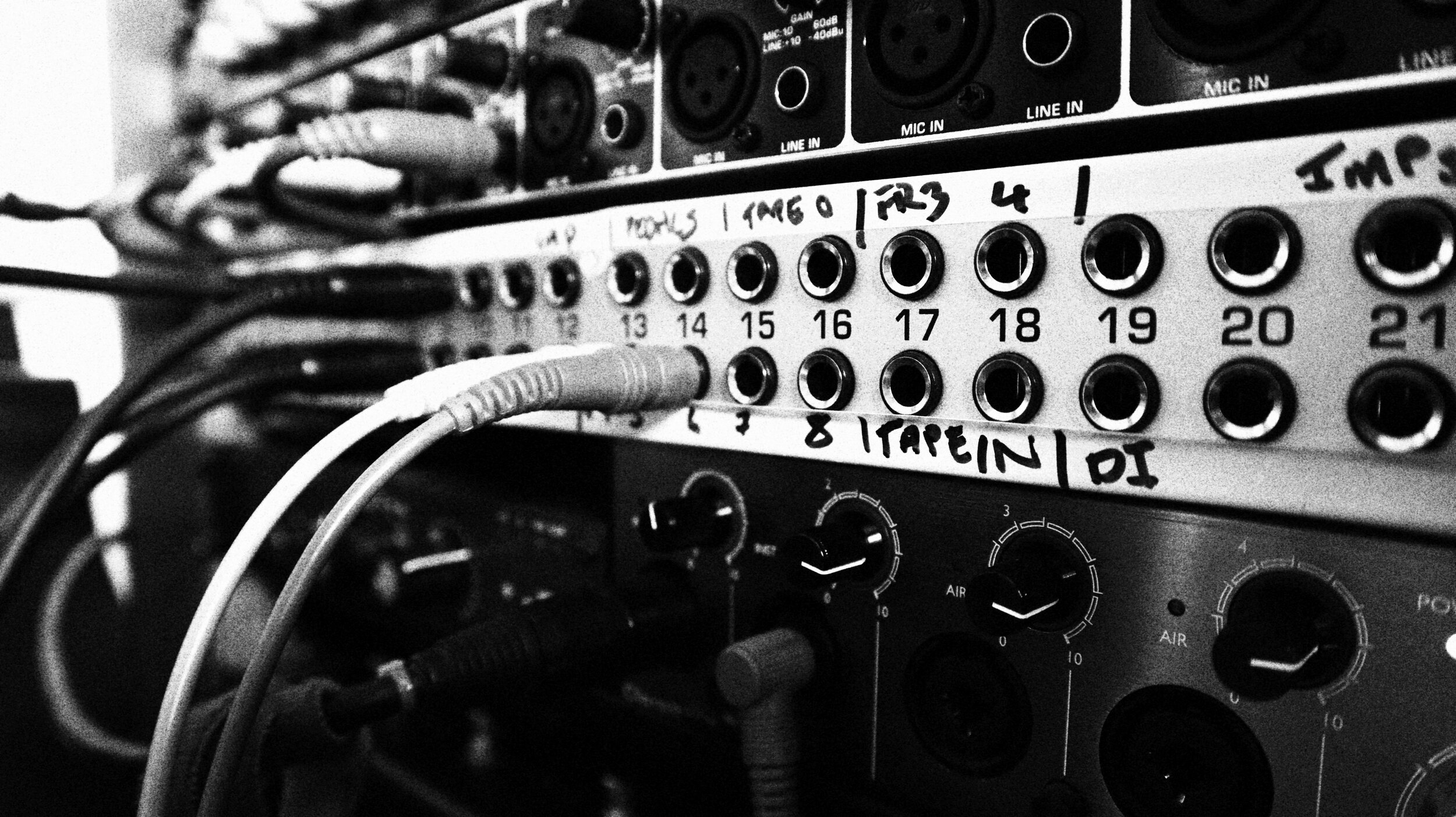
I notice it most clearly in music (obviously), when I think back, making music used to feel like the whole part of being a musician. Now it often feels like the least importent task among dozens or seemingly more important ones. Today, a musician is expected to be a photographer, videographer, graphic designer, marketer, promoter and content creator before they have even written a song. I know artists who spend more time designing and thinking about social media posts than writing songs. They also spend more time looking for #hacks to recording, writing, chord processions watching endless videos to try and give them the place to start. Starting is the hard part. Then then spend more time looking at analytics than listening and learning from others, and more time thinking about their visibility than their craft and creativity. Okay so now I feel like an old man shouting at a cloud….those days are gone Granddad, get with the program. Let AI write the song, and I will be the master of ‘dropping’ it on social media.
I honestly think it was around the early 2010’s where music (inset other creative form here) became surrounded by so much infrastructure that the act of making it started to disappear beneath the weight of everything else. Ironically, nobody forced this upon us, we willingly lead ourselves into it….am I guilty….of course I am, but I also know that whilst many in the world believe we have to keep heading in the same direction blindly, I believe that we can change direction…let everyone else carry on, there is no shame in going against the grain. The problem is that it happened gradually, platform by platform (oh MySpace how cool you actually were), app by app. We accepted the deal because each new tool promised freedom and meant we could short cut to being a star. Forget about managers, promoters and producers, the platform claimed it would connect us directly to audiences, and then every new service offered another route around the gatekeepers (boo to them). However, I think what these systems rarely mentioned was the hidden cost.
So what is that cost? The cost was that artists became their own managers, their own team….yeah freedom, but freedom without the skillset. I can build a house, I have the tools, the materials….but actually no f**king clue where to start….oh foundations….quick #lifehack build a house in 2 days videos please. Any level of creativity has now became inseparable from self-promotion. To paraphrase Mark FIsher, it is easy to imagine the end of the world, than the end of content. Now, every spare moment is another opportunity to post, engage, get depressed bt the comments, respond or optimise. #productivityhack alert. The freedom that technology promised often arrived hard and came hand in hand with a new form of labour. We escaped one set of gatekeepers only to become serfs of the tech-bros. But we are rock stars now.
An there lies another issues, when I think about the musicians I admired growing up, a big part of their appeal came from mystery. You didn’t know what they had for dinner, you didn’t know how the trick was done, you didn’t know which mic they used, you didn’t see them struggling over an idea. What you did see might be an interview once every few months (or not at all). You would buy an album, film, book, magazine, comic and live with it for a year or more. Large parts of the artists lives remained hidden from view, so your own imagination filled the gaps, and oh how did it fill those gaps. Because of that the arts, the film, the music felt larger because the people behind it were partially unknowable.
Today there are almost no gaps left, the magic trick has been revealled, everything is now performative, even ourselves when we produce any form of content. Is it right, is the light good, move to the left, have I got the best camera etc etc ad nauseam. We are all rock stars. As such we and the artists we love are expected to be permanently available. If they are not posting, they are told they are failing to engage. If they disappear for a few weeks, people wonder where they have gone. Silence itself has become suspicious these dates, yes the wise suggest that creativity often depends upon silence. To be fully creative requires periods of obscurity, reflection and wandering. Some of the best ideas I have ever had arrived while walking, listening, daydreaming or simply staring out of a train window. None of those activities generate engagement, nor content (well I suppose they could). This is often where creativity begins, not rock stardom.
We are learning or at least have kind of know for some time, that the internet struggles with this because it rewards output rather than thinking time. In fact in my own experience it penalises thinking time. I had my YouTube channel demonetised after years of hard work all due to taking some time a way to deal with real life. The content machine and tech-bro data complex values production over reflection, it encourages us to keep moving, keep posting and keep performing. Dance Monkey Dance. Just like the Rock Star, owned by their public, it is like a digital version of The Wall by Pink Floyd. We are all now comfortably numb. Over time constant level of performance changes how we think and we begin to see the world through the eyes of the algorithm. We begin to see art through the lens of capital, just as the rock star with the genre defining first albums then get trapped in the cycle of producing similar content. The question becoming which idea will perform well rather than which idea is worth pursuing. Which photograph will gain attention rather than which photograph matters to us. Which track fits a playlist rather than which track says something meaningful about the human condition….or is just f**king good fun. Creativity for many has stopped being an act of discovery, of representation, of abstraction (for some) and becomes just an act of optimisation. But I hear you scream…nobody tells artists what to create! Not directly but the system gently nudges us towards what is most visible, most shareable and most immediately rewarding. Those ideas are stuck in our sub conscious wether we like it or not. We are told we have infinite freedom, we have tools that can make our dreams come true (another post coming I think) but much of that freedom exists within invisible boundaries established by platforms and algorithms. The applications which make up the tools we use, are amazing but they are still closed boxes which you can’t tinker with. As Brian Eno states, “You have to find out how to fuck up technology.” Yet this is easy with physical tools, yet it is seemingly impossible to gain access to source code of Photoshop, mess it up and see if anything interesting comes out. We are encouraged to be unique, but only in ways that remain acceptible to the system.
Not only this but at the same time, music itself seems to occupy a different place within our day to day culture. Thanks to Spotify and AI (another post or six coming here I think) there is more of the ‘stuff’ than ever before, yet it most of this, at least at the outset, feels less significant, less important. We are all rock stars now. New albums arrive (sorry…are dropped) on Friday and are forgotten by Monday (if you are lucky…perhaps by Friday evening). Songs, films, articles, content pass through the system at extraordinary speed because another thousand are waiting behind in a line for our attention. Nothing now has time to settle and nothing it seems has time to become part of us.
I am that old (cough), that I still remember buying records and living with them for months, even years (Iron Maiden’s Live after Death). I knew every drop out, warble, every mistake and every strange production decision, every chant, every anecdote (“this is what not to do if a bird shits on you!”). Albums, films, books, magazine articles, photographs felt like places you existed and inhabited, perhaps as a voyeur of the magic trick of the rock start, rather than products to be consumed. These experiences became intertwined with memories, relationships and particular moments in life, they became cultural reference points, jokes between friend. We weren’t the rock stars then, we observed them and make wanted to be a bit like them. Today platform and content abundance has made access easier than ever, but it has also made attention more difficult. We have gained everything and somehow lost the ability to sit still with it. We are all rock stars now
I wonder if perhaps we have confused access with value and perhaps scarcity was not always the enemy we imagined it to be. When music (insert anything really in here from music to food) was harder to obtain, it often occupied a more central place in our lives. The effort involved in finding it, buying it and living with it created a deeper relationship. Today everything is everywhere all at once, yet it often feels strangely absent.
Don’t get me wrong, I know that there is an irony, and that is that the original dream was beautiful. 4 Track recorders, Drum Machines and affordable samples were works of art, they could give you a foot hold on to the ladder of stardom. The early internet was a wildwest of discovery, a place where you could be what you wanted, create pages how you wanted (usually unreadable with green text on a black background). The early internet technology was supposed to make creativity available to everyone…we COULD all be rock stars. In many ways it succeeded. More people can create than ever before and that is unquestionably a good thing. Yet alongside this came another development, the gate keeper disappeared, everyone was in the party, we were all rock stars. As a result we became a performers of ourselves and our lives became content. Our identity became our brand and our. experiences became material for future posts. The self became a project under constant revision.
That is why I think we are all rock stars now. Not because we are famous, but because we all of the same content and pressures of the rock star and as such are increasingly expected to live as if fame is always just around the corner. We curate ourselves as though an audience is watching, even when sometimes nobody is, learning to think about our lives from the outside, imagining how they might appear on our feed rather than simply experiencing them.
Lately, I have found myself drawn towards the opposite impulse. Experiences!! Smaller audiences, local scenes, physical media and tools. Working on slow projects, with work that may never find a large audience (or even an audience). I am creating work that exists because it feels meaningful rather than because it might perform well on YouTube. Increasingly, it feels remarkably radical making things that nobody asked for, yet aren’t uploaded to sit on a server consuming our depleting planetary resources.
Is this my new manifesto? Not everything needs to become content. Not every photograph needs posting. Not every field recording needs releasing. Not every thought needs sharing. Some things can remain private. Some things can exist purely for the pleasure of making them. Some things can remain unfinished, obscure or unseen.
As the self-titled ‘Creativity Kickstarter’ (do check out my book here), if I were to write another book then I might suggest that perhaps creativity begins when we stop imagining an audience and the capital potential of the work and start paying attention to the process again. Become the wannabe rock star. The future of creativity may not depend on better platforms or smarter algorithms. It may depend on recovering the ability to disappear for a while, and to make things slowly. To experiment without witnesses. To rediscover the pleasure of creating something simply because it fascinates us, this above all differentiates us from AI.
We spent decades trying to become visible. Now I wonder whether the real challenge is learning how to become invisible again. I am dreaming of being a rock star.
(Congratulations, before I am thoroughly pwned by the revelation that a post about the internet also exists on the internet…SO before the wisecracking internet arrives, yes, I am fully aware of the hypocrisy here. This post is content. I know. I posted a link to my book. I know. I am criticising the internet on the internet. Stunning detective work. Consider me pwned. But I am not arguing for the end of the internet, nor am I pretending I live in a candlelit hut making fanzines from bark. I am saying we might need to think a little harder than the binary sludge the world is currently drowning in. The point is not “internet bad.” The point is that when everything becomes content, performance, metrics, reaction, and personal brand, something quieter and more human gets pushed out of the frame. But yes, thank you in advance for pointing out that this is also a post.)