1. The Capture of Sound
I am always teaching that sound is immediate, it enters our being before we can prepare, before thought can form a perceptual shield against it. From the time we are in the womb, before ‘King Sight’ (Walter Murch in Chion’s Audio Vision) has taken over we are learning and understanding about the our world through it, and then when we born, our existence in the world is to be immersed in it, pulled into relations that we do not choose but cannot escape. Unlike sight, a sense which allows for distance and framing, sound insists on intimacy, it places us inside the world and ourselves. Ever since, just over 50 years ago, R. Murray Schafer tried to “tune the world” and formalised the notion of ‘soundscape’ and thus soundscape studies which has lead increasing formalisation within the frameworks of academia and now government legislation (for example in the Noise and Soundscape Plan for Wales 2023-2028). What began with Schafer’s call to understand and listen more intensively to the acoustic environment has, in many respects, been absorbed into institutional discourse: peer-reviewed journals, academic research projects, funding bodies, and the language of policy and urban planning. While this intellectualisation has given way to a new field and a much better understanding of the acoustic enironment, it has also generated vital new epistemologies, including acoustic ecology, noise abatement, design for sonic well-being, yet this has also created a distance. Sound (and thus soundscape), once rooted in the experience of communities (See Steven Feld’s work with the Kaluli people for example), places, and ordinary listening, now risks being overtaken and owned within a professionalised, often inaccessible domain.
Yet over the past half-century since Schafer burst onto the scene, sound has been steadily captured. Not captured in microphones as field recording has a much longer heritage, and recordings still leave sounds resonant, available, but instead captured in thought. Institutions have turned sound into a resource, an object, something that can be defined, categorised, and managed. A resonant vibration of air which once belonged to the ebb and flow of daily life is seemingly reframed as “the soundscape”: a unit of knowledge.
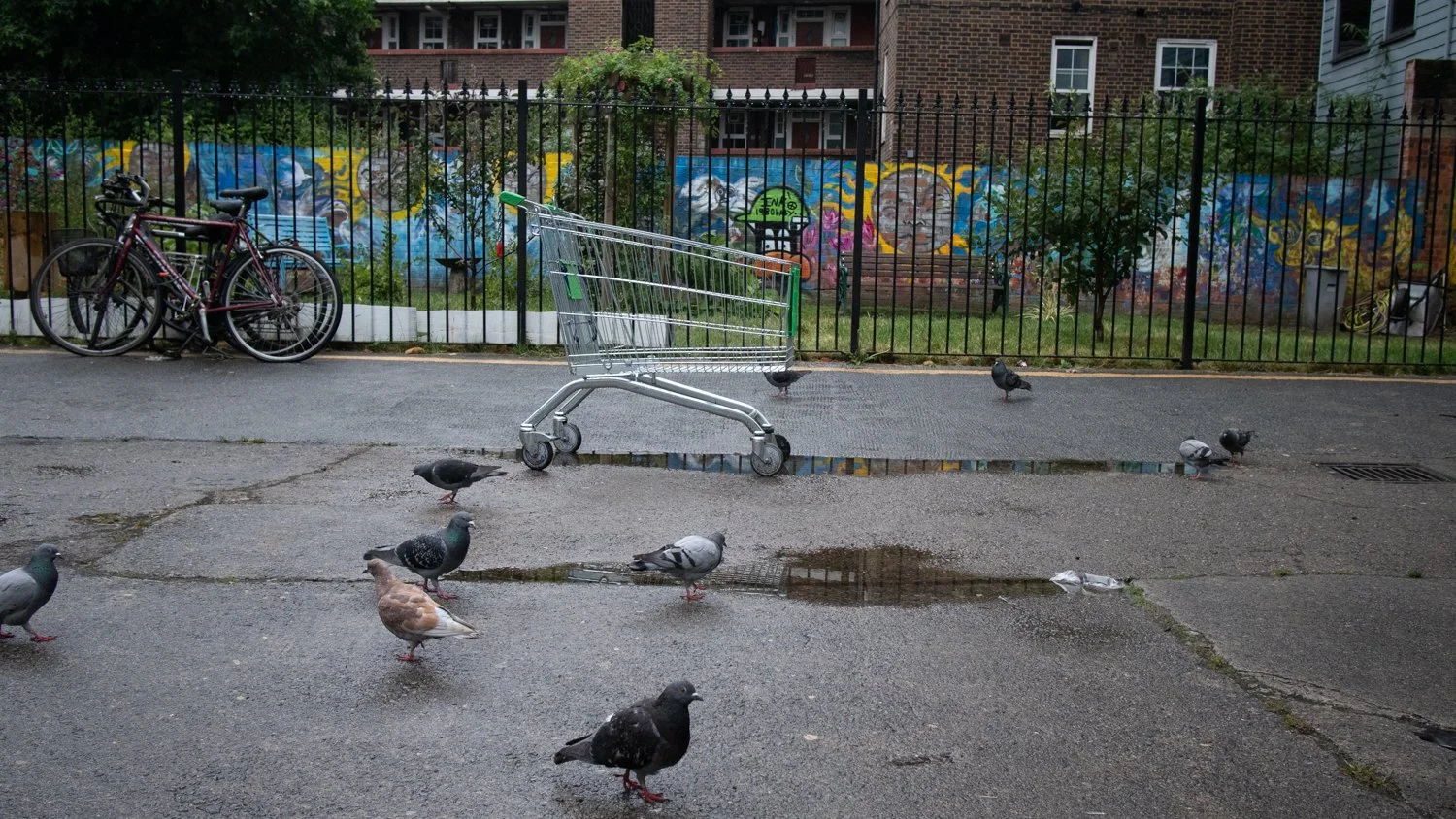
I would agrue that it is this enclosure of the sonic commons which mirrors the historical enclosure of land. Land which was once, common and was once shared has become fenced, owned, and repurposed. In this case, the fences are not physical boundaries, walls, hedgerows, land acts, but academic categories, methodological orthodoxies, and the singular belief of the authority of expertise. Communities who live within sound are often sidelined in the process of understanding, interpreting, designing and planning their sonic environments. This is not to undermine or negate the need for the ‘expert’, but at the same time, engagement with the community is key gaining an the , told that they lack the ‘technical’ language to describe it, that their experience must be filtered through professional interpretation. We must therefore always ask the question, a ‘soundscape for whom?’ when engaging with interventions in soundscape.
2. Sound as Lived Relation
It seems obvious to say, but sound is not an object; it is a subjective relation. Of course the physical entity can be quantified and acoustics does a good job of this. Yes that is similar to measuring the sea, knowing it’s salt content, temperature, density, it is not to understand what the sea means and how it affects us as individuals and communities. To hear is to be entangled in an assemblage, connected sonically with a place, with it’s histories, it’s poltics, it’s subjective meaning and with others. As individuals and as communities we know this instinctively, although may not realise it conciously.
When we look at the world, we see this in practices, for example, the tragedy in Aberfan in Wales where residents could distinguish the ominous rumble of coal slurry moving on the hillside before the catastrophic landslide of 1966; or the mill workers of Sheffield knew the distinct rhythm and textures of the industrial city’s steel mill; or how we insticively and innately know the year’s cycle by the call of certain birds, the drone of harvest machines, the effects of snow, rain or sun on the general soundscape, the sound of changing tarmac, or the shifting patterns of commuter patterns or schoolyard. We celebrate times of the year with sonic markers, we are sub consciously entwined with an expectation of place and time.
The sonic world guides us, and is part of us, even those with hearing impairments still connect with the vibrations and resonances which are ever present in our world. These cues become part of us before we are born, they become a key sense which is then relegated as sight takes over. Yet this individual and community knowing (or acoustemology) forms an auditory intelligence that is intrinsic yet hidden. As such this knowledge is not a finding of research but a lived practice of knowing. A sound level meter, or site survey cannot capture this only an interpretation, spectrograms flattens knowing and co-opts it to the visual hegemony and the authority of the “expert listener” can often displace or distract from the essence of knowing. But as individuals and as communities we already listen, we already partake, so the issue then becomes if our listening and knowing will be valued or erased.
3. The Problem of Academic Authority
The capture of sound is rarely neutral, and never has been since the early days of field recording. As Sterne writes “the technologies and practices of sound reproduction, show how sound capture and hearing are shaped by broader social, technological, and cultural forces, rather than being neutral phenomena”. Sound is entangled with power and in power structure, even Schafer seemingly argued that sounds he liked were ‘good’ and everything else was ‘bad’ (hifi or lofi in his terms). We still see this today where academic hegemony often dictates that ‘nature’ sounds are good, ‘city/urban’ sounds are bad. This is massive oversimplification, but it is a theme which runs through much soundscape discourse. There is idea that the job of soundscape and soundscape studies is to cleanse the sound environment, into an banal, controllable shopping centre like experience. If urban sound studies are commissioned these are often by city councils or developers, where reports on ‘acoustic quality’ are then translated into zoning decisions, noise ordinances, and redevelopment plans, yet seeminly from a remote position of non-lived experience. What was once sonic conflict, for example between residents who want quiet, workers who need nightlife, businesses who rely on vibrancy, simply just becomes data, a report stored and filed away on a hard drive, usually only to be resurrected in case of litigation. Yet, the conflict is never resolved, the communities and parties effected rarely understood or listened to, they are all only managed.
This translation flattens knowing and experience, where a sleepless resident becomes “exposure above WHO guidelines”, and a thriving club becomes “source of noise nuisance.” These are both of course real issues, with potentially serious (and fatal) consequences, and must be arbitrated as such, the solution is neither simple or quantifiable. The multifaceted ranges of perecptual issues, along side expectation, control, automony, age, social and political view all become layers of complexity which need to be addressed beyond the 15 minute LAeq or the raw waveform captured on a field recorder. Why does this matter? Because he contradictions of urban (and rural) life are often rendered as technical, mere specifications on an PDF report, stripped of context, politics and knowing.
By attempting to take ownership of this process, the academy reduces the hierarchies of the real expert listeners, the individuals and communities, rather than shaping their auditory environment, become subjects of study.
4. Why Sound Belongs to Communities
Sound belongs to communities because it is inseparable from lived experience and collective life. For example, through:
Memory and identity: In the Outer Hebrides, Gaelic psalm singing is carried communally and currently at risk of disappearing, a sonic form which teaches not only language but an experssion of community emotional states. These sounds are not just curiosities to be captured and archived; they are archives of belonging to place, time and community.
Agency and justice: In London, residents near Heathrow airport have fought for decades (as long as I can remember!) against the noise pollution from ever increasing flight paths. The community struggle is not about decibels but about the right to sleep, to breathe, to live without constant intrusion arguble as result of ever increasing consumerism and captial. Yet those who also work at the airport often have another perspective, that of acceptance as the entity that is Heathrow, is also their master.
Creativity and ritual: The Notting Hill Carnival transforms the streets of West London every year, with bass, steel drums, and sound-systems. Yet NHC it is not just a festival; it is a sonic act of claiming space, a ritual of diasporic memory and community power.
To exclude communities from shaping their sound environments is to strip them of memory, justice, and creativity. It is to create a sense of sonic feudalism.
5. Practices of Return
The return of sound to the commons should not be seen as a theoretical gesture, just like the protection of the physical commons and rights to roam have become a growing battlefield, against the take over from landlords and property developers. It is already happening in scattered practices that resist enclosure.
a. Shared Recording
The British Library’s Unlocking Our Sound Heritage part of the Save Our Sounds project, though institutionally framed, worked with local groups to digitise and curate their own sound collections. For example in Hull, residents contributed tapes of community choirs, oral histories, and everyday life. Ian Rawes amazing London Sound Survey, a livelong devotion to recording and sharing the sounds of London. These archives do not simply preserve; they re-activate listening as a communal practice.
b. Listening Gatherings
Projects like Soundcamp in London invite communities to get together for soundwalks and recording expeditions, streaming the live soundscapes of the spaces they encounter, as a means reengaging and interacting with the sound environment.
c. Sonic Interventions
In London, Bill Fontana’s Harmonic Bridge re-tuned the sounds of a the Millennium bridge into a sound sculpture, making audible what was previously ignored. Such interventions demonstrate that sound is always malleable, always subject to reimagination and becoming part of the community as a new shared artifact.
d. Everyday Pedagogy
Workshops and opportunities by groups like Invisible Flock or Sound and Music introduce listening to schools and community centres, teaching children not only to record but to take ownership of their sound environments. My own work looking at ways to bring sound, immersive audio and recording to communities and local groups is going some way to raise awareness and create interest in reclaiming the soundscape. These practices do not demand academic knowhow, they only demand time and the ability to listen, and as a result they cultivate community capacity.
6. Listening as Political Act
Listening is not a neutral act, it requires an allocation of time, attention, recognition and value.
The Stop HS2 protests were partly sonic: chants, drumming, and the use of portable speakers to amplify dissent, trying to replicate the sound that would become part of their new lived experience. To frame such sounds as “nuisance” is to deny their political meaning. Similarly, the drumming at climate marches is not decoration, it is tempo, propulsion, a way of sustaining collective movement. [link to recording from Stop the War March from World soundscape Project]
Noise complaints, protest chants, church bells, construction work, souped up car burn out, motorbikes, all of these are assertions of presence. To me they ask the question: who has the right to fill this air/space? Whose voices are heard, whose are silenced?
To treat sound as data is to deny these questions. To treat sound as political is to acknowledge them.
7. Toward a Commons of Listening
A commons is not simply shared space; it is shared maintenance, ownership and care. The sonic commons would not be free of conflict but open to negotiation.
The Bristol Night Time Economy Board, for instance, has brought residents, club owners, and councils together to negotiate sound conditions. The result is not harmony (no pun intended) but recognition: each party is forced to listen to, acknowledge and hear the voices others.
Similarly, in community radio projects across the UK, from Resonance FM in London to Chapel FM in Leeds, the act of broadcasting local voices constitutes a sonic commons. These stations are not just media outlets, they become a sonic commons, a listening infrastructure.
The commons is a fragile entity, always at risk of take over, of dominance, of a lack of hierachical authority and it requires maintenance. The commons also requires refusal of enclosure or removal, it then offers the possibility of communities deciding together what they want to hear, what they will tolerate, what they will celebrate.
8. The Ethical Imperative
To listen is to care, for others, for the environment (rural and urban) and for conflict resolution. To refuse to listening is to deny recognition.
In Grenfell Tower, residents had complained for years about fire safety, and their voices were dismissed. The tragedy was not only architectural or bureaucratic; it was sonic. Warnings were unheard, dismissed and voices were silenced. This is the starkest reminder that listening is not an optional skill. It is an ethical obligation, in this case when listening stops, lives are lost.
Returning sound to communities is thus not a cultural luxury but an ethical necessity. It is how we recognise each other’s presence, rights, and vulnerabilities.
Conclusion: From Capture to Care
The history of sound in the modern era has been one of capture and thus has been drawn into the frameworks of academic study, policy agendas, corporate branding. But sound is too intimate, too entangled with life, to be owned in this way. Sound is our way of knowing the world. To return sound to the commons is to restore it to those who live with it daily. Communities already know how to listen. The role of practitioners is not to speak for them but to amplify, to facilitate, to hold open spaces where their listening can shape collective futures. One method of exploring this is through ‘soundtalking’ a method I developed as part of the Our Dee Estuary Project, for more information please read my paper in Sustainability.
The question is no longer “what do experts say about soundscapes?” but “what do we hear together, and what will we do with it?” ultimately ‘A soundscape for whom?’